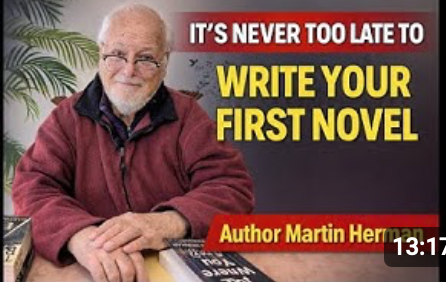
How Authors Connect With Readers Beyond the Book
Martin Herman, author of historical faction mysteries, shares how he connects with readers through his new YouTube channel and audiobook greeting cards which have complete audiobooks inside a physical card, perfect for any occasion.

How I Research History Without Losing the Story
Historians collect facts. Novelists collect trouble.
When you write historical fiction, you need both.
Historical fiction can be a tricky balancing act. On one hand, readers deserve authenticity. On the other, they deserve a good story. If a novel reads like a textbook, I have failed as a storyteller. If the history feels careless, I have failed as a researcher. Somewhere in the middle is the place where I like to work. I call it faction.
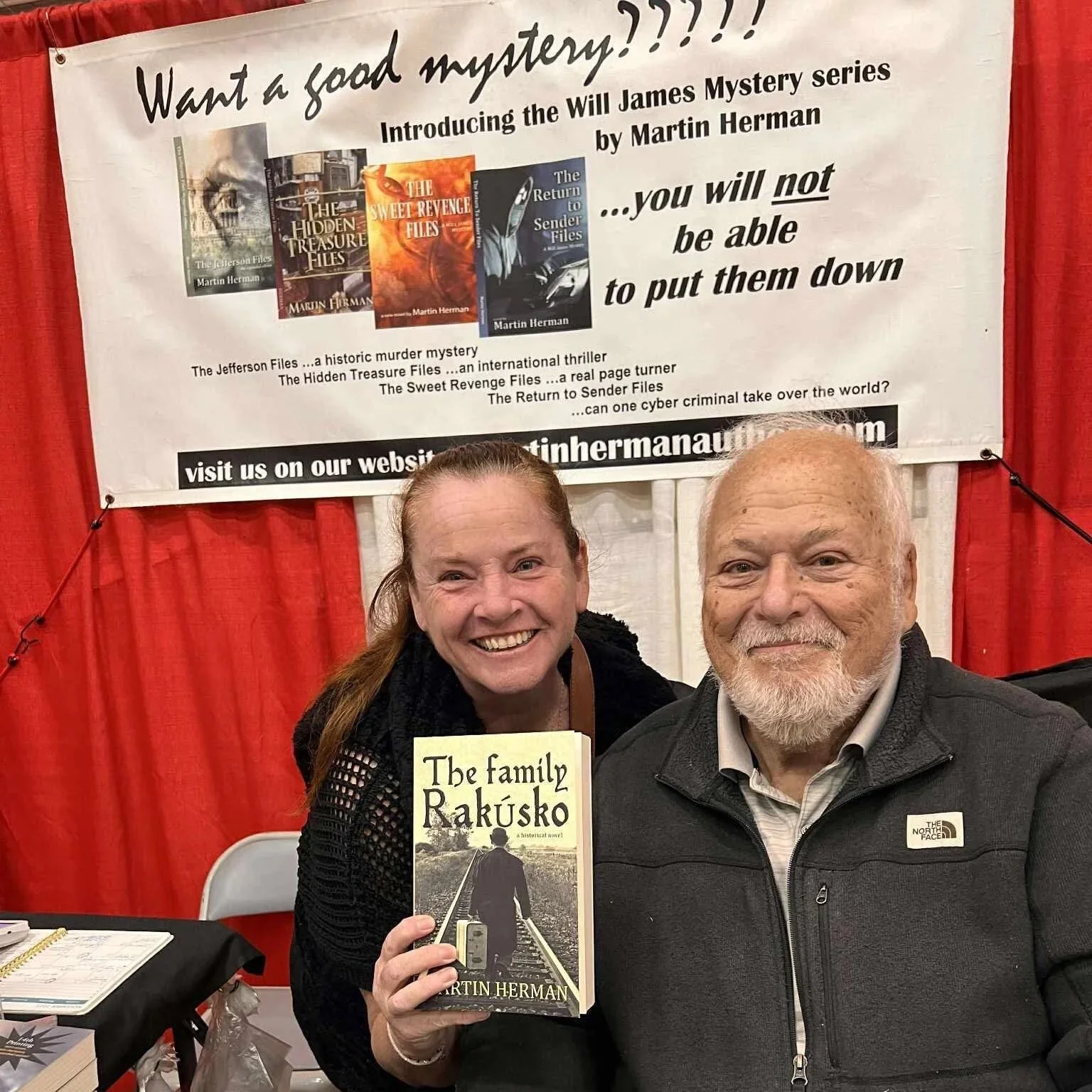
Behind the Scenes: How a Writer Thinks
Go behind the scenes with author Martin Herman as he reveals how a writer thinks. In this reflective and witty blog post, discover the creative process behind historical fiction, biographies, and character-driven storytelling.

Why Historical Fiction Still Matters in a Fast-Paced Digital World
Explore the enduring appeal of historical fiction with author Martin Herman. Learn how historical novels offer a unique escape from the digital noise, provide valuable lessons from the past, and connect readers to the timeless human experience. Perfect for book lovers, writers, and anyone seeking depth in a world of distractions.
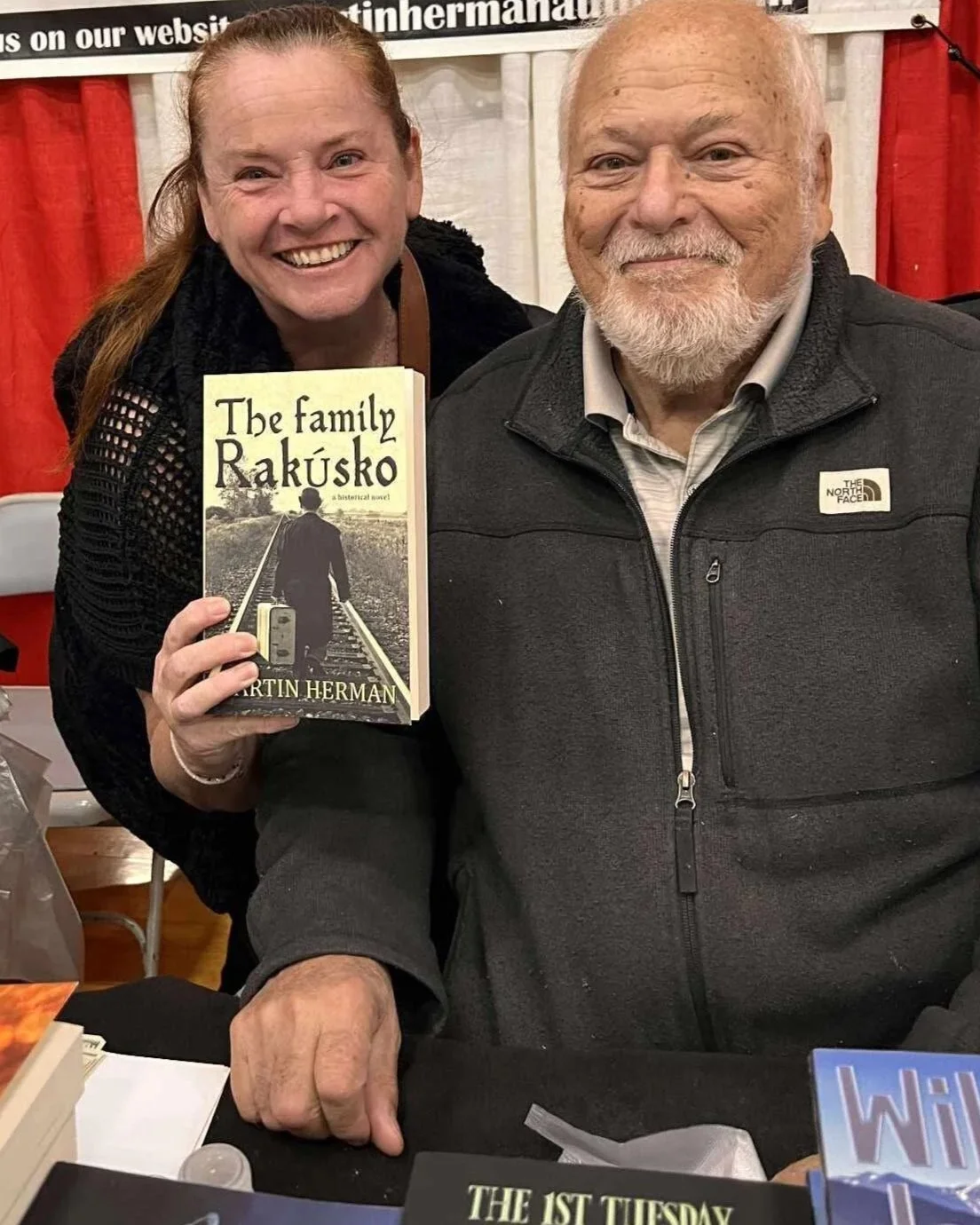
How True Stories Inspire My Characters
Martin Herman reveals how real people, events, and reader experiences shape his “faction” storytelling—where fact and fiction become one compelling world.
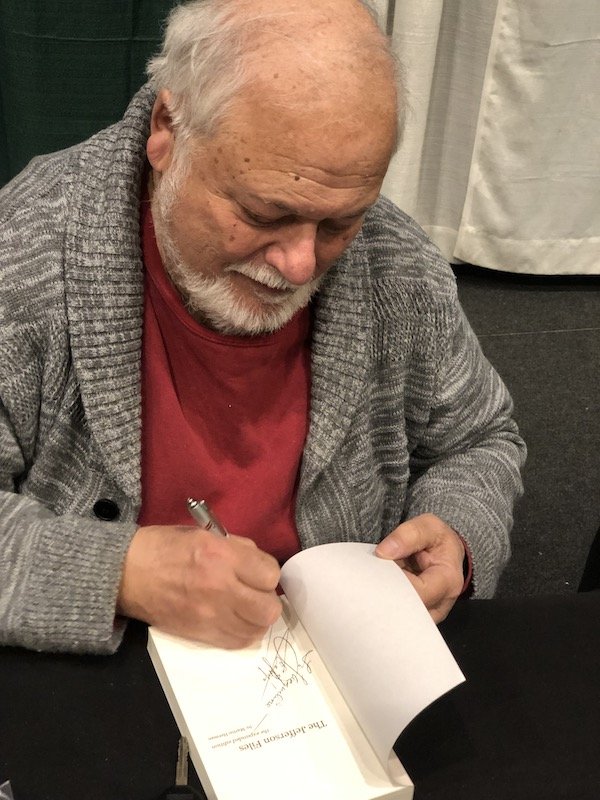
Why I Still Write in My 80’s
Why I Still Write….If you had asked me back in eighth grade whether I’d still be writing stories in my 80’s, I probably would’ve laughed. But here I am and I wouldn’t have it any other way.

For Whom the Sun Rises: An Author’s View
Over the years, I've adapted to writing just about anywhere—back tables in fast food joints, libraries surrounded by stacks of research books, and even the passenger seat of a car. I'm set if I have some scrap paper, a few sharp pencils, and a fully charged laptop. But the room in my home with a view of the sunrise is my favorite place to write!

My Journey to Becoming a Published Author
My Journey to Becoming a Published Author
It was early February 1980. I was on a plane sitting on the tarmac at LAX for what seemed like an eternity. Reaching into my attaché case, I began reading that day’s USA Today, left by my hotel door earlier that morning. One news item grabbed my attention: an FBI sting operation involving several dozen targeted elected officials, including then-sitting members of Congress. Living in New Jersey at the time, I was immediately drawn to the name of U.S. Senator Harrison Williams, who represented New Jersey.